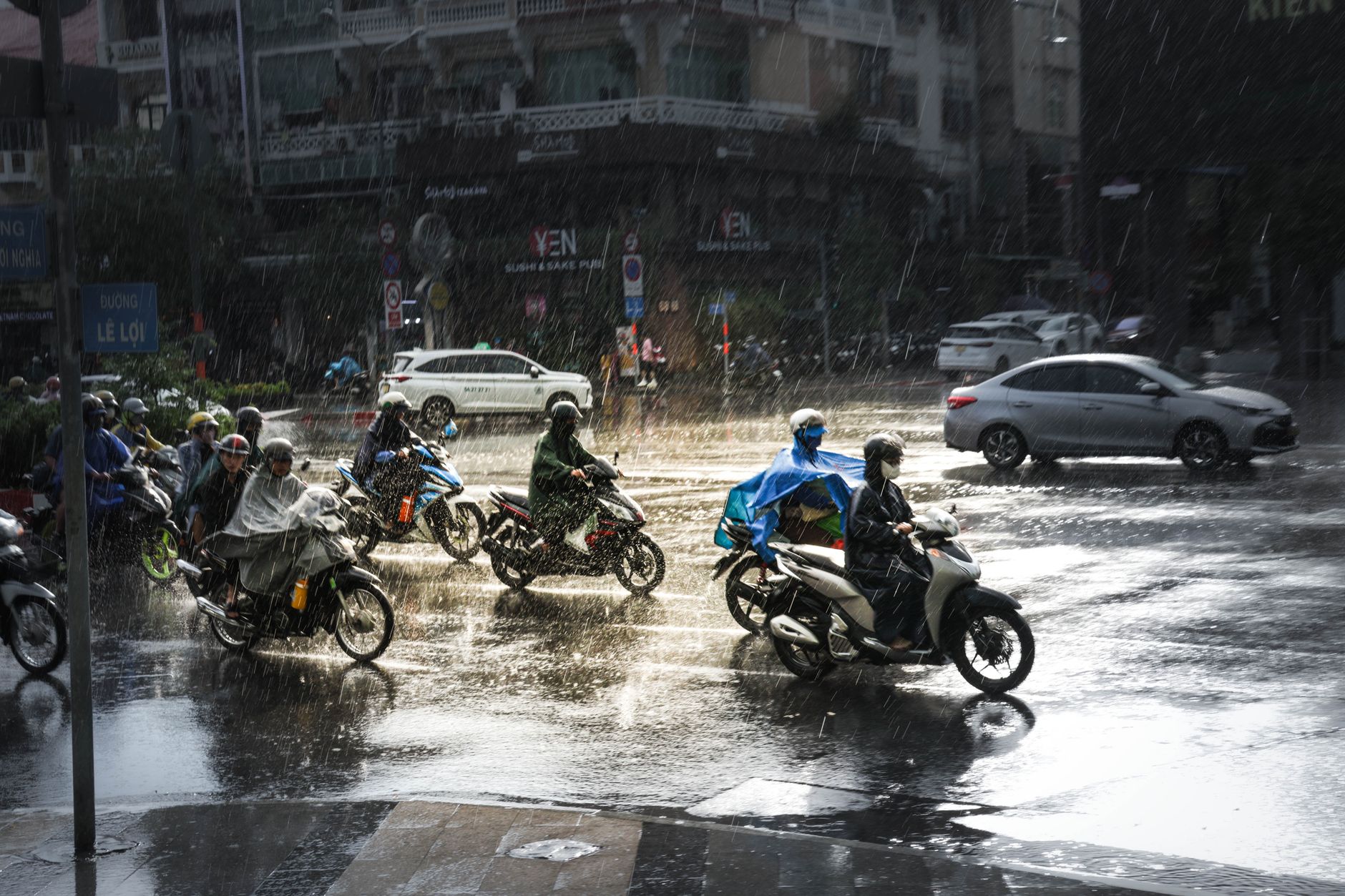
Monsoon Tyre Tips for Nagpur Riders - Stay Safe in the Rain
Nagpur’s monsoon arrives in late June and stays through September. In those four months, the same roads you ride confidently in summer become a completely different challenge - standing water hides potholes, painted road markings become ice-slick, and visibility drops to near zero in heavy downpours.
Tyre preparation and riding adjustment can mean the difference between a safe ride home and a hospital visit.
How Monsoon Changes Your Tyres’ Behaviour
Two physical forces cause most monsoon accidents:
Aquaplaning: When a thin film of water lifts the tyre off the road surface. You lose steering and braking ability entirely. This happens at higher speeds (50+ km/h) on waterlogged stretches.
Reduced grip on painted surfaces: Road markings, zebra crossings, and metal covers become dangerously slippery when wet. Braking on a painted junction box in rain is like braking on ice.
Tyres with worn tread can’t channel water away fast enough - aquaplaning starts earlier and more severely.
Tyre Checks Before Monsoon Hits
1. Tread depth inspection
Minimum legal tread depth is 1.5mm, but for monsoon riding, 2.5mm+ is recommended. Here’s a quick test: press a ₹10 coin into the groove. If the groove is shallower than the coin’s border markings, replace the tyre before monsoon.
Wear indicators are moulded into the tyre groove - small raised sections. When the tread surface reaches the wear indicator level, replace immediately.
2. Check for sidewall cracks
Tyres stored through Nagpur’s harsh summer often develop small cracks in the sidewall rubber. These are structural weaknesses that worsen in monsoon when the rubber swells slightly with moisture. If you see web-like cracking on the sidewall, the tyre is past its safe life.
3. Valve integrity
Ensure valve caps are on tight. Water entering through a loose valve can cause gradual pressure loss, which is harder to detect in rain.
Pressure Adjustments for Monsoon
Contrary to what some riders think, you should increase tyre pressure slightly in monsoon:
- Add 2-3 PSI above your normal standard spec
- Higher pressure makes the tyre stiffer and more resistant to pothole pinch punctures
- It also helps water expulsion slightly, reducing aquaplaning at lower speeds
Summer reading was 33 PSI rear? Run 35-36 PSI in monsoon.
Note: Check in the morning before riding - cool rain can lower pressure below your adjusted reading by the next day.
Riding Adjustments for Monsoon Nagpur
Slow Down - Especially Through Junctions
Braking distances double on wet roads. At 40 km/h in rain, your stopping distance on worn tyres is approximately 2× what it is on dry roads with good tyres.
Intersections with painted lines are the most dangerous - approach every junction 20-30% slower than you would normally.
Watch for Hidden Potholes
Nagpur’s pothole problem is worst in September, after 3 months of rain have eroded road edges and opened new craters. Waterlogged sections hide potholes entirely - the water looks uniform but could be 15cm deep.
Rule: If water is above your footrest level, walk the bike or find a detour. Don’t power through.
Avoid Sudden Braking
Use both brakes progressively, applying light pressure first, then gradually increasing. Never grab the front brake on a wet painted surface. In monsoon, engine braking (downshifting) is more reliable than brake-braking on slippery surfaces.
Lane Position
In Nagpur’s city roads, water drains towards the left lane edge - so the extreme left lane position has the deepest water. Ride centre-left rather than the extreme edge. Also, drains and grates are concentrated near lane edges - these are hazards for narrow tyres.
Waterlogged Area Hazards in Nagpur
Some Nagpur areas flood reliably each monsoon:
- Ganeshpeth underpass - known to waterlog heavily
- Sitabuldi main road (near market) - poor drainage, frequent flooding
- Parts of Hingna Road - construction disruption worsens drainage
- Low-lying areas in Gandhibagh - old city drainage can’t handle heavy rain
If you know your route has a flood-prone section, scout an alternate route before monsoon or carry a WhatsApp contact for a friend who can pick you up in a pinch.
What to Do if You Get a Puncture in the Rain
Rain makes punctures harder to detect - the bike’s behaviour feels different in wet conditions anyway. Signs:
- Unusual vibration that persists through corners
- Bike pulling consistently to one side
- Squishy or vague steering feel
If you suspect a puncture in rain:
- Pull left immediately - don’t try to reach home or shelter
- Find the first available covered area - petrol pumps, shopping plazas, under a flyover
- Book Punctrr from cover - mechanics carry rain gear and come regardless of weather
- Don’t ride on the flat - wet roads + flat tyre = extremely dangerous
Punctrr operates 24/7 through monsoon. Response times may extend by 10-15 minutes on heavy rain days, but service doesn’t stop.
Monsoon Tyre Maintenance Summary
| Action | Timing |
|---|---|
| Full tyre inspection | Before June 1st |
| Replace worn tyres (< 2mm tread) | Before monsoon |
| Pressure increase (+2-3 PSI) | Start of monsoon |
| Weekly pressure check | Throughout monsoon |
| Post-monsoon tyre inspection | October |
Monsoon riding in Nagpur is manageable with the right tyres, correct pressure, and adjusted riding. Download Punctrr before the season starts - one saved number can get you moving again within minutes of a flat.
Got a puncture? Help is minutes away.
Book a mechanic with the Punctrr app - reaching you anywhere in Nagpur in about 10 minutes.
Download Punctrr App